Professional Tools without the Premium Price Tag 🔥 In Stock UK – Free Next Day UK Mainland Delivery on Air Compressors →
UK stock • 1-year warranty • Free UK mainland delivery on all air compressors • UK-based support • Hassle-free returns
A good air compressor transforms a home workshop. Suddenly you can power nail guns, spray guns, blow out sawdust, inflate tyres, and run a whole range of pneumatic tools — all from a single machine. But choosing the right one for home use involves different priorities than buying for trade or industrial use. Here's what to consider.
Home Workshop Priorities Are Different
When buying for home use, you care about:
How Noisy Is Too Noisy?
Noise is the number one concern for home workshop compressors. Traditional oiled compressors can run at 90dB+ — genuinely painful at close range and likely to cause neighbour complaints.
Our recommendation for home use:
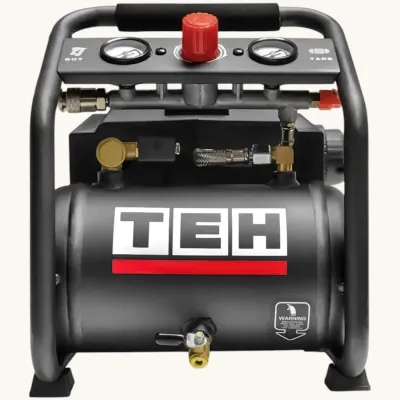
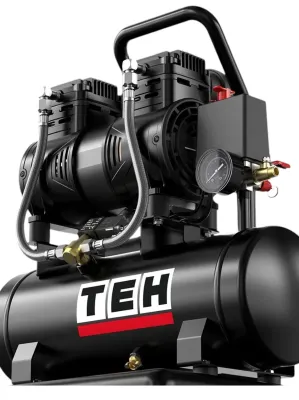
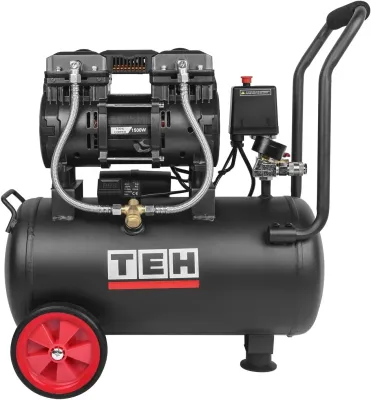
The TEH TAC24L runs at just 75-80dB — making it one of the quietest 24-litre compressors available and our top recommendation for home workshops.
What Size Do You Need for a Home Workshop?
For most home workshops, a 24-litre tank is the sweet spot — large enough to run nailers, spray guns, and air tools continuously, small enough to store easily and move around.
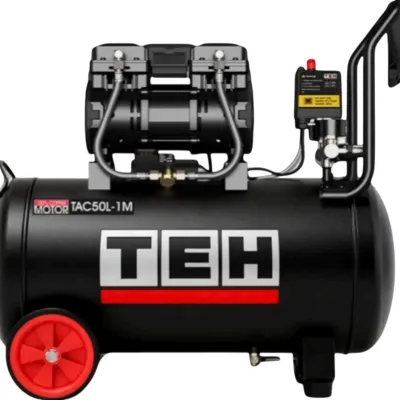
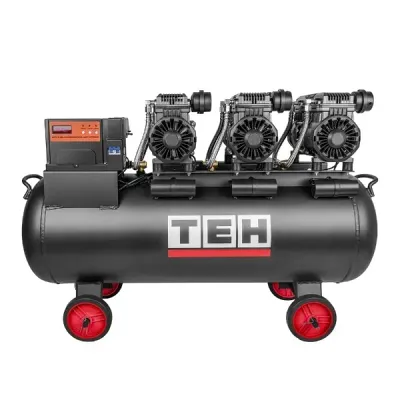
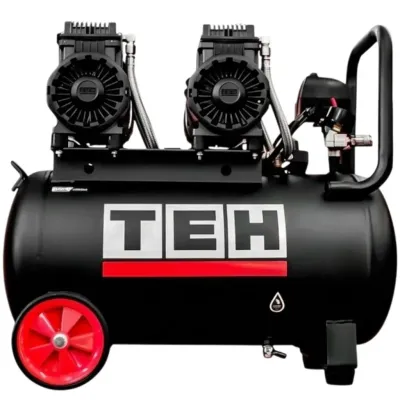
If you're planning to do spray painting or run multiple tools, step up to the 50-litre TAC50L-M1 — the larger tank maintains more consistent pressure for longer spray sessions.
What Can You Do With a Home Workshop Compressor?
With a TEH TAC24L or TAC50L-M1 you can:
Home Workshop Compressor Setup Tips:
Location: Keep the compressor on a flat, stable surface. Oil-free compressors can be used in any orientation — great for compact workshop spaces.
Air line: Invest in a quality coiled air hose — it stays tidy and extends your reach without tangling. Our 9-metre coiled air hose gives you plenty of reach around any home workshop.
Moisture: UK air is humid. Always use an inline moisture filter/trap to prevent water getting into your tools and paint jobs.
Storage: The TAC24L's compact footprint means it fits under a workbench easily — keeping your workshop floor clear.
Safety: Always drain the tank after use by opening the drain valve at the bottom — this prevents internal corrosion and extends tank life.
Our Top Home Workshop Recommendation:
TEH TAC24L — 24L Oil-Free Air Compressor 1500W 2.5HP
For home workshops that do occasional spray painting or need a bit more capacity, step up to the TEH TAC50L-M1 — same quiet oil-free operation in a larger 50-litre format.
Professional Tools without the Premium Price Tag 🔥 In Stock UK – Free Next Day UK Mainland Delivery on Air Compressors →
UK stock • 1-year warranty • Free UK mainland delivery on all air compressors • UK-based support • Hassle-free returns