Professional Tools without the Premium Price Tag 🔥 In Stock UK – Free Next Day UK Mainland Delivery on Air Compressors →
UK stock • 1-year warranty • Free UK mainland delivery on all air compressors • UK-based support • Hassle-free returns
Welding is one of the most rewarding skills you can learn — but it comes with genuine hazards that must be respected. Arc flash, UV radiation, toxic fumes, fire risk, and electrical shock are all real dangers that proper safety practices eliminate. This guide covers everything you need to stay safe.
The Hazards of Welding
Understanding the hazards is the first step to managing them effectively:
Arc flash and UV radiation: The welding arc produces intense ultraviolet and infrared radiation — far more intense than direct sunlight. Even a brief glance at an unprotected arc causes arc eye (photokeratitis) — an extremely painful condition similar to severe sunburn on the cornea. Skin exposed to arc radiation burns like severe sunburn.
Welding fumes: Welding produces fumes containing metal oxides, flux vapours, and shielding gas breakdown products — many of which are toxic with prolonged exposure. Manganese from mild steel welding, chromium from stainless steel, and zinc from galvanised steel are particularly hazardous.
Fire and explosion: The welding arc and spatter can ignite flammable materials. Welding near flammable liquids, gases, or materials is extremely dangerous.
Electrical shock: Welding machines operate at voltages that can cause serious injury — particularly in wet or damp conditions.
Burns: Hot metal, spatter, and contact with the electrode holder are all burn risks.
Essential Welding PPE
Welding helmet: The most important piece of welding PPE. Protects eyes and face from arc flash, UV radiation, and spatter.
Shade numbers for arc welding:
Welding gloves: Heavy leather gauntlet-style gloves that protect hands and forearms from spatter, heat, and UV radiation. MMA welding gloves are thick and heat-resistant. TIG welding gloves are thinner to allow the dexterity needed for feeding filler rod.
Welding jacket or sleeves: Protect arms and torso from spatter and UV radiation. Leather is the traditional material — heavy cotton or flame-resistant synthetic materials are also used. Never weld in synthetic clothing — it melts and fuses to skin.
Welding boots: Steel-capped, leather, with no exposed lacing that spatter can land in. Never weld in trainers or canvas shoes.
Ear protection: Grinding, chipping slag, and some welding processes produce significant noise — wear ear defenders or plugs.
Ventilation — Critical for Health
Welding fumes are serious — long-term exposure causes respiratory disease, and some welding fumes are classified as carcinogenic.
Minimum requirements:
Particular hazards:
Fire Prevention
Electrical Safety
Setting Up Your Welding Area
For TIG Welding — Additional Considerations
TIG welding uses argon shielding gas:
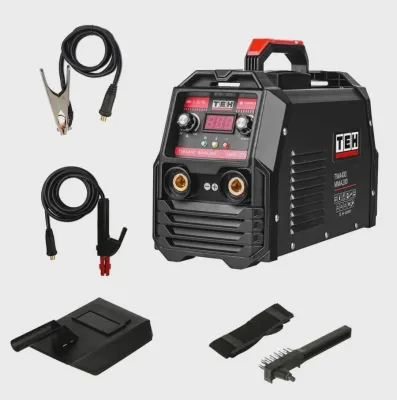
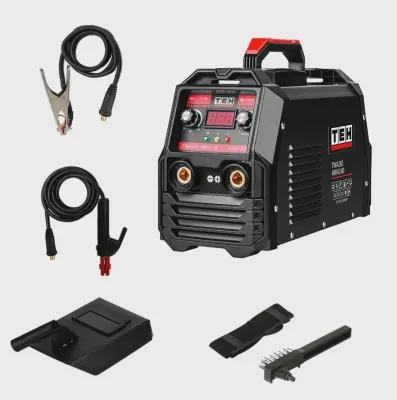
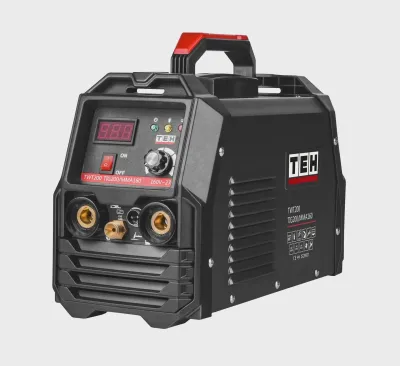
TEH Welding Range:
| Model | Process | Max Output | Best For |
|---|---|---|---|
| TWA280 MMA140 | MMA only | 140A | General fabrication, site work, beginners |
| TWT200 | TIG + MMA | 200A TIG / 160A MMA | Precision work, stainless, aluminium |
Both feature IGBT inverter technology, wide voltage tolerance (AC160-270V), CE certification, and digital current displays.
Browse our full welding range at tehtools.co.uk
Professional Tools without the Premium Price Tag 🔥 In Stock UK – Free Next Day UK Mainland Delivery on Air Compressors →
UK stock • 1-year warranty • Free UK mainland delivery on all air compressors • UK-based support • Hassle-free returns